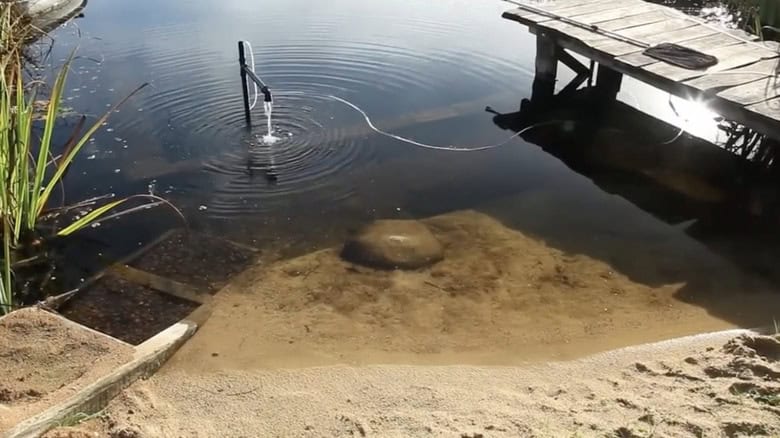
With the bottom of the swimming pool raised, you can now build the secondary wall to retain the sand. David uses 50-lb sandbags; typically you would fill these bags about 2/3rds so they stack properly. First, he puts down some geotextile (heavy-duty landscape fabric) to prevent the gravel from puncturing them. The polypropylene bags have limited strength, so to protect them, David also traps a spare piece of pool liner underneath and wraps it around the back of the wall and over the top.
Finally, he adds a layer of geotextile running from outside the pool area, across the gravel bottom, and up and over the front of the secondary wall. David suggests weighing the geotextile down with more gravel, but you could perhaps use something like paving slabs to make it more stable and secure. Then it’s just a question of covering the area with sand to finish the beach.
You may find that with regular use, the sand will tend to migrate into the pool, but it shouldn’t take a lot of work to rake it back periodically. You might also want to to give it a natural oasis vibe.
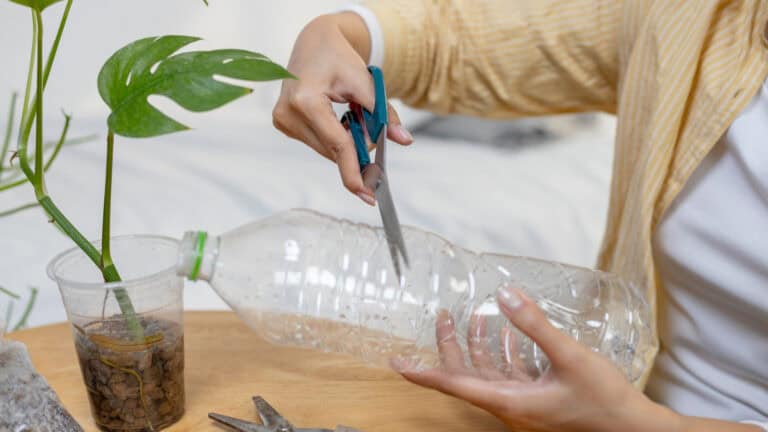
Goodbye Traditional Bird Baths: Use A Plastic Bottle To DIY One With Running Water
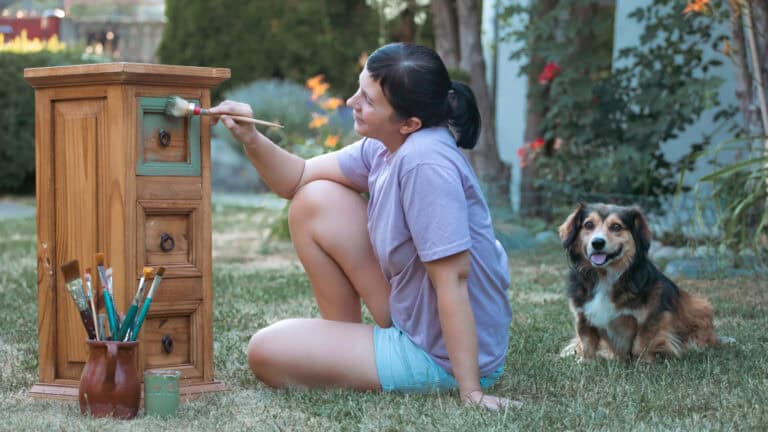
For More Beautiful Wood Furniture, Paint It Norwegian-Style And Never Go Back
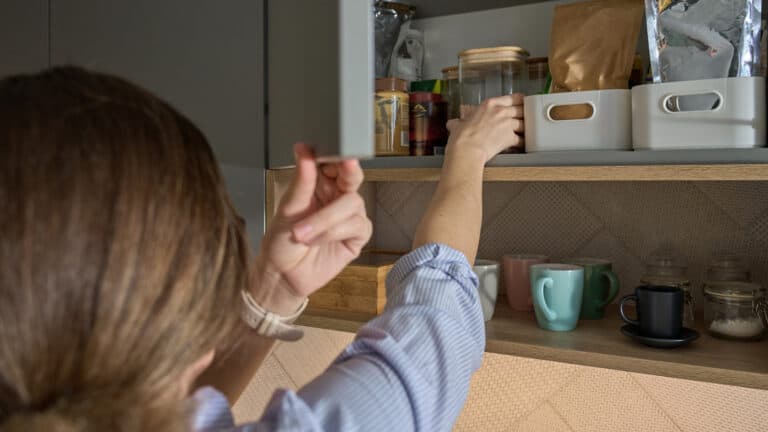
Turn A Cardboard Box Into Cleverly Hidden Kitchen Storage With A Savvy DIY
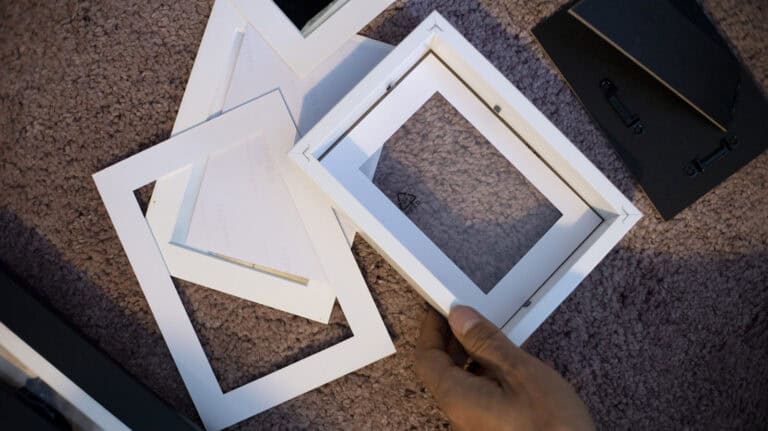
Everyone Used To Collect Them — Now They’re A Budget-Friendly Find For Collage Walls
One Teaspoon And All The Worms In The Body Die Instantly! Try It
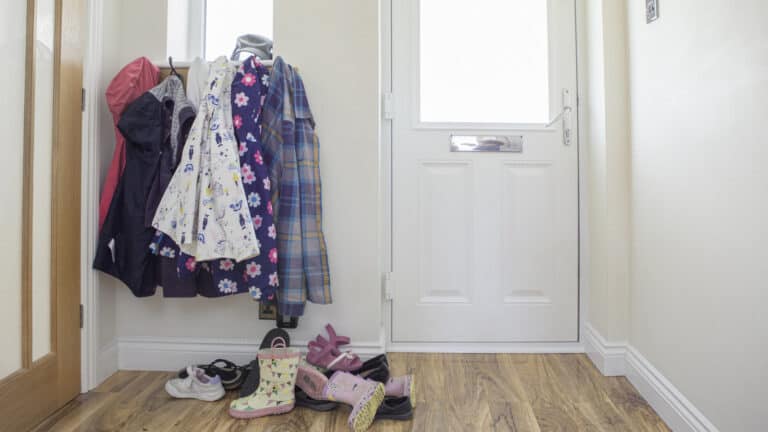
No More Boring Racks — This ’80s Find Is A Cuter Way To Organize Your Entryway
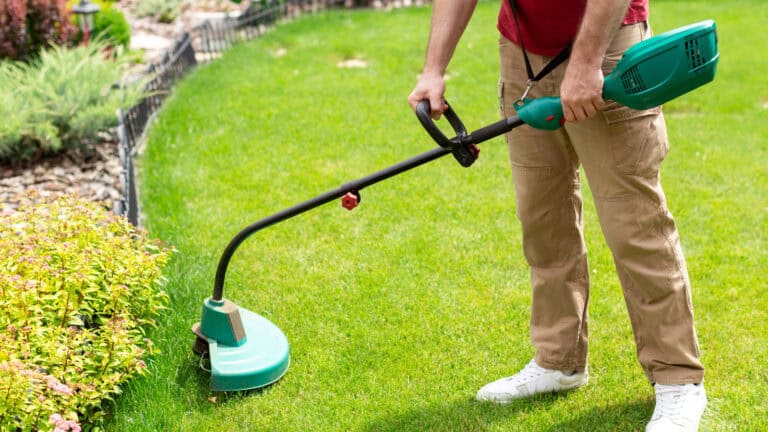
The DIY Weed Wacker Idea That Seems Genius, But Is Actually A Waste Of Time
Hair Will Grow Back! No Matter How Severe The Baldness
Trade In The Flimsy Baskets: The Durable Vintage Find That Creates Instant Storage